Historic Defenses of Tampa Bay
It is a little known fact today that the historic city of Tampa, Florida, was once a major center for smuggling weapons into the island nation of Cuba.
This made Tampa Bay a likely target for attack when the United States went to war with Spain in 1898. In a flurry of construction activity, the U.S. Army sought to defend the
important Florida port by building powerful seacoast fortifications around the entrance to the harbor. The best preserved of these defenses can still be seen at Fort De Soto Park on Mullet Key.
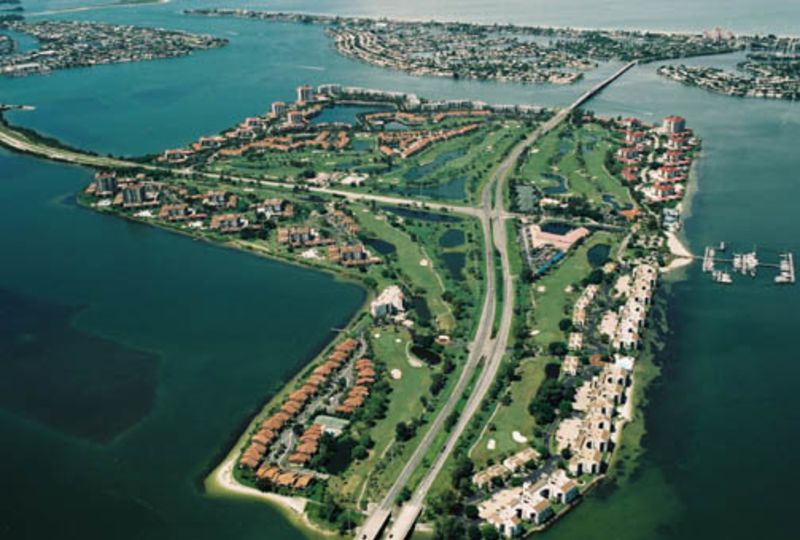
Easily accessible from nearby St. Petersburg by car, Mullet Key has a rich history dating back hundreds if not thousands of years. Tocobaga and other Indians fished and harvested shellfish in the waters around the key for centuries before the Spanish ships of Panfilo de Narvaez and Hernando de Soto passed within site of its shores during the 1500s.
The island was surveyed by Bvt. Colonel Robert E. Lee and three other U.S. Army engineers in 1849 and recommended as a site for coastal defenses. Although the key played a minor role in the blockade of Tampa Bay during the Civil War, it would be nearly 50 years before the government acted on Lee’s recommendation and fortified the island.
With the onset of the Spanish-American War in 1898, the army moved quickly to fortify Mullet Key. The smuggling and filibustering activities launched from Tampa had angered
the Spanish. The port city also served as a major concentration points for U.S. troops preparing to invade Cuba.
Work on the island began in November of 1898 and within six months construction teams had built a long wharf, offices, mess hall, quarters for workers and even a narrow-
gauge railroad. The building of the massive mortar emplacements began the following year and Fort De Soto was an active battery by 1900.
A part of Fort Dade, the part of which stood on nearby Egmont Key, Fort De Soto mounted eight 12-inch seacoast rifled mortars. The last four guns of this type in the continental United States can still be seen at the fort.
Only minimally garrisoned during World War I, Fort De Soto was evacuated by the army in 1923 and only a caretaker left to supervise the works. One of the two powerful batteries was washed away during the 1930s and Mullet Key served only as a bombing range during World War II. Pinellas County bought the island from the U.S. Government in 1948.
To reach the park from St. Petersburg, follow State Highway 682 (Pinellas Bayway) to State Highway 679 (Anderson Boulevard), turn left and follow 679 to Mullet Key and the fort.
In addition to its historic sites, the park offers outstanding beaches, nature trails, boat ramps, campgrounds, picnicking and more.